Our garden has suffered neglect for at least two years. When we first moved into this house, we were excited at the prospect of so much space: more yard, more garage, more storage... We wanted to put the garden in the sunniest part of the yard, but it had the worst soil. In order to take advantage of the sun, we had to build raised beds.
After constructing four large (72 square feet each) beds, we soon discovered all the critters were drawn out of the woods by our new vegetation: the deer and rabbits had their way with our produce. Next came the fence!
This was an unexpected expense, so I built it on the cheap... I ended up using "cherry" landscaping timbers instead of decent treated posts, along with 60 inch "rabbit" wire. I soon realized that the deer could easily make it over the 5 foot wire fencing, so I added two rows of single-strand aluminum electric fence wire to extend the fence height to 7 feet. The posts made it five years before the first one rotted and failed. One-by-one, a handful of other posts began leaning. The sagging fence was the final straw - it was time to fix up the eyesore that was once our garden.
Of all the victims of our neglect, the saddest to me was my burgeoning hop collection. Two years ago, I harvested close to 10 lbs, of hops (wet). I'm pretty sure that was the last time I harvested, and did nothing in the way of maintenance since: no pruning back, no fertilizing, no supplemental watering... It's a bit depressing to think that I had gone from 10 lbs. from 13 varieties to completely ignoring them altogether.
As I prepped to replace the fence and shape up the garden, I eyed my pots of hops. The pots are arranged alphabetically, and the first in the bunch was Cascade: a complete loss - rotted out by poor drainage (and a pot that had apparently been dumped then righted). It got better after that, and despite my laziness, the rhizomes themselves were thriving - completely filling the pots (especially the Cluster).
I trimmed things back, saving a handful of starter rhizomes for friends before carefully repotting. This is my 2nd, and in a couple of cases 3rd, division and repotting. Recommitted to their care, I am hopeful about this years crop.
Now I need to get back to work on the fence and reclaiming the rest of the garden!
Monday, February 23, 2015

Tuesday, February 17, 2015
A Return to Roots
At least twice each year, my military buddies (and a few others) get together for a group brew day... This usually happens on Veteran's Day and President's Day weekend, when there is an extra day off and we can manage a guilt-free day away from family commitments.
I always host. I always prepare the main dish we'll be eating during the day. I always have fun, but usually have much less time for socializing as I juggle an all-grain batch, food, and other hosting duties. I'm usually still finishing my brew day after everybody else has left. And then I'm cleaning up in the dark.
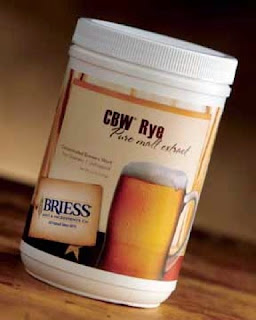 At my local homebrew shop (Olympic Brewing), I noticed Briess liquid rye malt extract for the first time... I'm a sucker for rye! I'll try anything with the word "rye" in it. I grabbed 3 Kg with the intention of trying it out soon...
Another thing I really love is drafting up recipes. My recipe binder is probably at least 3 times s thick as my brewing log! So of course, after buying the rye malt syrup I took a couple of shots at rye recipes.
Around the same time, I was making final plans for the group brew day... A light bulb went off: why not brew extract with grains? That simple decision was quite liberating actually. I seldom brew extract anymore - usually at least half of my fermentables come from a mash (partial mash); occasionally I'll brew quick batches of extract to fill keg gaps between all-grain brews (especially in the winter).
It would be nice to have a bit more social time when everybody was over. Cutting liquor heating, mash, and sparge time out of my brew day might mean hanging out more than flitting about. My brew day would be synched with everybody else's (who mostly brew extract batches). Plus, it was like a step back in time - a return to my roots - to what got me hooked in the first place...
I flipped back to my earliest recipes in my brew logs. It was a trip down memory lane. Although I could no longer bring to mind tasting memories of most of those early brews, I had my notes. And I remembered little associations for every single one: the ones I brewed for my wife, the bad batches, the hits and misses. The "beginner" shined through: other people's recipes (Papazian, homebrew shop, etc.), odd combinations of ingredients, weird formulations, kitchen sink brews...
My recipe formulation has come a long way... Thanks in part to Brewing Classic Styles, I can quickly formulate a beer that falls where I want it. Experience with various ingredients - different grains and hops - has helped me with what fits best and where. My extract batches have benefited in the same way - I have a few that I stick with because they yield good results with minimal fussing: American Pale, British Bitter, and Bavarian Hefeweizen (the first two are usually made to build up a good supply of healthy yeast).
Although I was going to make the move to simplicity for the big brew day, I did step it up from my straightforward stand-by extract brews... I opted for a more sessionable IPA: on the low end of ABV for the style, with the bulk of the hopping as late additions. The liquid rye would provide the bulk of the fermentables, along with a little dry malt extract. I also decided to do a mini-mash of 2-row along with a bit of chocolate malt (concurrent with my main boil to preserve the time efficiency) for a bit of extra character and color.
The brew day went great. I had more time to talk and hang out, as I had anticipated. There was much less cleanup for me. I actually had time with my family at the end of the brew day.
Within 12 hours, my beer was off and going like gangbusters in the carboy. Time will tell how the beer actually turns out, but the process was fun, and I'm sure that the end result will be enjoyable one way or another as well.
------------------------------
Recipe: Rye't On
------------------------------
General
------------------------------
Category: India Pale Ale (IPA)
Subcategory: American IPA
Recipe Type: Extract
Batch Size: 6 gal
Volume Boiled: 7 gal
Mash Efficiency: 72 %
Total Grain/Extract: 9.11 lbs
Total Hops: 4.6 oz
Calories (12 fl. oz.): 185.5
Ingredients
------------------------------
0.5 lbs 2-Row Brewers Malt
0.25 lbs 2-Row Chocolate Malt
6.6 lbs CBW® Rye Liquid (Malt Extract)
1.76 lbs Dry Extra Light Extract
0.6 oz Bravo (Whole, 15.50 %AA) boiled 90 minutes.
0.6 oz Magnum (Whole, 14.50 %AA) boiled 15 minutes.
0.7 oz Chinook (Whole, 13.00 %AA) boiled 5 minutes.
0.25 oz Magnum (Whole, 14.50 %AA) boiled 5 minutes.
1.3 oz Chinook (Pellets, 13.00 %AA) added to Secondary.
0.6 oz Citra (Pellets, 12.00 %AA) added to Secondary.
0.6 oz Magnum (Pellets, 14.50 %AA) added to Secondary.
Yeast: Wyeast 1056 American Ale
Notes
------------------------------
-Mini-mash 2-row and chocolate malt @152°
-Dry hop 5 days
Vital Statistics
------------------------------
Original Gravity: 1.056
Terminal Gravity: 1.012
Color: 16.13 SRM
Bitterness: 47.7 IBU
Alcohol (%volume): 5.8 %
[recipe created/calculated using Beer Tools]
I always host. I always prepare the main dish we'll be eating during the day. I always have fun, but usually have much less time for socializing as I juggle an all-grain batch, food, and other hosting duties. I'm usually still finishing my brew day after everybody else has left. And then I'm cleaning up in the dark.
 At my local homebrew shop (Olympic Brewing), I noticed Briess liquid rye malt extract for the first time... I'm a sucker for rye! I'll try anything with the word "rye" in it. I grabbed 3 Kg with the intention of trying it out soon...
Another thing I really love is drafting up recipes. My recipe binder is probably at least 3 times s thick as my brewing log! So of course, after buying the rye malt syrup I took a couple of shots at rye recipes.
Around the same time, I was making final plans for the group brew day... A light bulb went off: why not brew extract with grains? That simple decision was quite liberating actually. I seldom brew extract anymore - usually at least half of my fermentables come from a mash (partial mash); occasionally I'll brew quick batches of extract to fill keg gaps between all-grain brews (especially in the winter).
It would be nice to have a bit more social time when everybody was over. Cutting liquor heating, mash, and sparge time out of my brew day might mean hanging out more than flitting about. My brew day would be synched with everybody else's (who mostly brew extract batches). Plus, it was like a step back in time - a return to my roots - to what got me hooked in the first place...
I flipped back to my earliest recipes in my brew logs. It was a trip down memory lane. Although I could no longer bring to mind tasting memories of most of those early brews, I had my notes. And I remembered little associations for every single one: the ones I brewed for my wife, the bad batches, the hits and misses. The "beginner" shined through: other people's recipes (Papazian, homebrew shop, etc.), odd combinations of ingredients, weird formulations, kitchen sink brews...
My recipe formulation has come a long way... Thanks in part to Brewing Classic Styles, I can quickly formulate a beer that falls where I want it. Experience with various ingredients - different grains and hops - has helped me with what fits best and where. My extract batches have benefited in the same way - I have a few that I stick with because they yield good results with minimal fussing: American Pale, British Bitter, and Bavarian Hefeweizen (the first two are usually made to build up a good supply of healthy yeast).
Although I was going to make the move to simplicity for the big brew day, I did step it up from my straightforward stand-by extract brews... I opted for a more sessionable IPA: on the low end of ABV for the style, with the bulk of the hopping as late additions. The liquid rye would provide the bulk of the fermentables, along with a little dry malt extract. I also decided to do a mini-mash of 2-row along with a bit of chocolate malt (concurrent with my main boil to preserve the time efficiency) for a bit of extra character and color.
The brew day went great. I had more time to talk and hang out, as I had anticipated. There was much less cleanup for me. I actually had time with my family at the end of the brew day.
Within 12 hours, my beer was off and going like gangbusters in the carboy. Time will tell how the beer actually turns out, but the process was fun, and I'm sure that the end result will be enjoyable one way or another as well.
------------------------------
Recipe: Rye't On
------------------------------
General
------------------------------
Category: India Pale Ale (IPA)
Subcategory: American IPA
Recipe Type: Extract
Batch Size: 6 gal
Volume Boiled: 7 gal
Mash Efficiency: 72 %
Total Grain/Extract: 9.11 lbs
Total Hops: 4.6 oz
Calories (12 fl. oz.): 185.5
Ingredients
------------------------------
0.5 lbs 2-Row Brewers Malt
0.25 lbs 2-Row Chocolate Malt
6.6 lbs CBW® Rye Liquid (Malt Extract)
1.76 lbs Dry Extra Light Extract
0.6 oz Bravo (Whole, 15.50 %AA) boiled 90 minutes.
0.6 oz Magnum (Whole, 14.50 %AA) boiled 15 minutes.
0.7 oz Chinook (Whole, 13.00 %AA) boiled 5 minutes.
0.25 oz Magnum (Whole, 14.50 %AA) boiled 5 minutes.
1.3 oz Chinook (Pellets, 13.00 %AA) added to Secondary.
0.6 oz Citra (Pellets, 12.00 %AA) added to Secondary.
0.6 oz Magnum (Pellets, 14.50 %AA) added to Secondary.
Yeast: Wyeast 1056 American Ale
Notes
------------------------------
-Mini-mash 2-row and chocolate malt @152°
-Dry hop 5 days
Vital Statistics
------------------------------
Original Gravity: 1.056
Terminal Gravity: 1.012
Color: 16.13 SRM
Bitterness: 47.7 IBU
Alcohol (%volume): 5.8 %
[recipe created/calculated using Beer Tools]
Monday, September 23, 2013
9/23/13 Happy Fall! A harvest message...
I don't know why, but my "urge to brew" always increases during the fall. And, no, it has nothing to do with pumpkins. (Although it is always cool to field questions about or hear from folks who are brewing my pumpkin ale recipe!)
I brewed a lot in August - 25 gallons (5x 5 gallon batches). I was particularly proud of two of those: my German Pils (turned out perfect - crystal clear, grainy and dry) and my Wit (which was a first attempt at the style). Unfortunately, I did not clean/organize a lot in August, so the brew garage is a mess... and that saps my brewing motivation.
I have two fall projects in the works... One is a clone recipe, the other is a new process. I owe a 5-gallon batch of beer to a raffle winner, and he likes Iron Horse's Quilter's Irish Death. I have been meaning to clone that one since my era of closing down the Acme Grub Shack once a month... I have a couple of recipes in the pipe: one I made based on grain info from Iron Horse's brewer, and one from my LHBS. I'm hoping to get to these within the week, brewing half batches...
The other project has me very excited... I have a friend who has a house in Eastern Washington - Twisp actually. He has been growing a small patch of barley each year, and wants me to help him make it into beer! So, he gave me a very small (about 1/3 lb) jar of homegrown barley, which I am now going to try to malt. Of course, the eventual goal is to grow enough (along with our own hops) to brew our own 100% homegrown beer.
I'm working on a malting system that will be easy to scale up for when we get to that stage. From what I have read, one of the keys on the malting end is the ability to easily drain the grain periodically. It would be great to have a traditional British floor malting set-up, but that's not very practical. I'm thinking of something along the lines of Charlie Papazian's zapap system (I know, that system is actually for mashing and separating wort - but I see this as fundamentally the same process: separate he liquid from the grain)... Instead of a 5-gallon bucket, I'm looking for something wider and shallower.
I'll worry about drying and kilning after I get the malting squared up...
I brewed a lot in August - 25 gallons (5x 5 gallon batches). I was particularly proud of two of those: my German Pils (turned out perfect - crystal clear, grainy and dry) and my Wit (which was a first attempt at the style). Unfortunately, I did not clean/organize a lot in August, so the brew garage is a mess... and that saps my brewing motivation.
I have two fall projects in the works... One is a clone recipe, the other is a new process. I owe a 5-gallon batch of beer to a raffle winner, and he likes Iron Horse's Quilter's Irish Death. I have been meaning to clone that one since my era of closing down the Acme Grub Shack once a month... I have a couple of recipes in the pipe: one I made based on grain info from Iron Horse's brewer, and one from my LHBS. I'm hoping to get to these within the week, brewing half batches...
The other project has me very excited... I have a friend who has a house in Eastern Washington - Twisp actually. He has been growing a small patch of barley each year, and wants me to help him make it into beer! So, he gave me a very small (about 1/3 lb) jar of homegrown barley, which I am now going to try to malt. Of course, the eventual goal is to grow enough (along with our own hops) to brew our own 100% homegrown beer.
I'm working on a malting system that will be easy to scale up for when we get to that stage. From what I have read, one of the keys on the malting end is the ability to easily drain the grain periodically. It would be great to have a traditional British floor malting set-up, but that's not very practical. I'm thinking of something along the lines of Charlie Papazian's zapap system (I know, that system is actually for mashing and separating wort - but I see this as fundamentally the same process: separate he liquid from the grain)... Instead of a 5-gallon bucket, I'm looking for something wider and shallower.
I'll worry about drying and kilning after I get the malting squared up...
Sunday, March 31, 2013
Easter!
It was a beer-centric Easter. Big shock, eh?
Our tradition over the past few years has been to host the family - whoever can come - at our house for the big meal and festivities. Lately, this has dropped down to just my in-laws...
When it comes to food, they are probably my most critical audience (excluding the boys, whose taste preferences change seemingly week-to-week). This is not a problem (they have always liked everything I've ever made), but it is major consideration. The centerpiece of my Easter meal has become a home-cured ham.
My recipe has evolved over the years, beginning with a recipe that I found calling for a lot of dried dark fruits, salt, and tawny port. Then I discovered beer brine (thank you Sean Paxton at www.homebrewchef.com)! Note that at no stage did I actually smoke my pork (if you really miss that smokiness - which is often an additive rather than a process - you can either smoke your ham after it is brined, or use a beer that utilizes smoked malt like rauchbier or smoked porter) but technically speaking, ham is cured leg of pork...
This year, I forgot to buy my Dijon mustard (a critical ingredient in the "crust" of my ham). This forced another evolution this year (the recipe has stayed mostly the same the last couple of times)... I made a dry mixture of brown sugar, dry mustard powder, paprika, garlic powder, paprika, and savory instead of the usual mustard crust. And I opted for "slow and low" - 250* for 6 hours (covered for the first 5 hours).
Wow! The meat was the most tender ever! And it has spectacular flavor...
Here was our menu:
• Brined Mustard-Savory Ham (home-cured) w/ Gravy
• Scratch-made 3-Cheese Red Potatoes au Gratin
• Mashed Mixed Root Vegetables (3 types if sweet potatoes/yams, rutabagas, turnips, parsnips...)
• Steamed, Sautéed Basil Brussels' Sprouts and Kohlrabi
I accompanied my flavorful meal with a 750ml of Brasserie DuPont Vielle Provision - THE Saison.
Our tradition over the past few years has been to host the family - whoever can come - at our house for the big meal and festivities. Lately, this has dropped down to just my in-laws...
When it comes to food, they are probably my most critical audience (excluding the boys, whose taste preferences change seemingly week-to-week). This is not a problem (they have always liked everything I've ever made), but it is major consideration. The centerpiece of my Easter meal has become a home-cured ham.
My recipe has evolved over the years, beginning with a recipe that I found calling for a lot of dried dark fruits, salt, and tawny port. Then I discovered beer brine (thank you Sean Paxton at www.homebrewchef.com)! Note that at no stage did I actually smoke my pork (if you really miss that smokiness - which is often an additive rather than a process - you can either smoke your ham after it is brined, or use a beer that utilizes smoked malt like rauchbier or smoked porter) but technically speaking, ham is cured leg of pork...
This year, I forgot to buy my Dijon mustard (a critical ingredient in the "crust" of my ham). This forced another evolution this year (the recipe has stayed mostly the same the last couple of times)... I made a dry mixture of brown sugar, dry mustard powder, paprika, garlic powder, paprika, and savory instead of the usual mustard crust. And I opted for "slow and low" - 250* for 6 hours (covered for the first 5 hours).
Wow! The meat was the most tender ever! And it has spectacular flavor...
Here was our menu:
• Brined Mustard-Savory Ham (home-cured) w/ Gravy
• Scratch-made 3-Cheese Red Potatoes au Gratin
• Mashed Mixed Root Vegetables (3 types if sweet potatoes/yams, rutabagas, turnips, parsnips...)
• Steamed, Sautéed Basil Brussels' Sprouts and Kohlrabi
I accompanied my flavorful meal with a 750ml of Brasserie DuPont Vielle Provision - THE Saison.
Friday, March 29, 2013
Hops 2013
All the signs are pointing to spring here in the PNW!
Last year I repotted my hops into larger pots (fear of commitment keeps mefrom planting them in the ground!). I think this was at least part of the reason for my reduced yield - in 2011, I got several pounds of hops, but not even a pound in 2012, despite adding several new varieties. I am hopeful that I might return to higher yields this year!
When folks (homebrew shops, hop farms) start talking about selling rhizomes each year, I start checking my pots... Two weeks ago, I started to see things other than weeds starting to poke their green heads up! So, this past weekend, I weeded the pots (no small task!), and heaped done fertilizer and compost onto each family of new bines... Some of them were already close to 6" tall and looking to grab onto something!
Tomorrow, the plan is to string my twine. Fifteen feet of fun! By now, all of them should be getting talk enough to train to the twine... A few wraps clockwise will get them headed in the right direction! Depending on just how talk they are, I might also be able to leaf them up a bit as well...
Last year I repotted my hops into larger pots (fear of commitment keeps mefrom planting them in the ground!). I think this was at least part of the reason for my reduced yield - in 2011, I got several pounds of hops, but not even a pound in 2012, despite adding several new varieties. I am hopeful that I might return to higher yields this year!
When folks (homebrew shops, hop farms) start talking about selling rhizomes each year, I start checking my pots... Two weeks ago, I started to see things other than weeds starting to poke their green heads up! So, this past weekend, I weeded the pots (no small task!), and heaped done fertilizer and compost onto each family of new bines... Some of them were already close to 6" tall and looking to grab onto something!
Tomorrow, the plan is to string my twine. Fifteen feet of fun! By now, all of them should be getting talk enough to train to the twine... A few wraps clockwise will get them headed in the right direction! Depending on just how talk they are, I might also be able to leaf them up a bit as well...
Monday, March 25, 2013
Stout Stew
I received several requests for this recipe...
I will start with the unadulterated recipe:
2 T oil
2 large onions, halved then sliced thin
2 c carrots, chopped coarsely
1/2 c celery, chopped (I like to use the inner portion, including the lovage)
2-3 c potatoes, chopped in 1" cubes
4-5 T flour
1/2 t thyme
1/2 t salt or seasoned salt
1 t black pepper, ground
2-3 lb beef (suitable for braising - chuck, brisket, plate, etc.), cubed
2 c (16fl oz) Stout (I use homebrew ;-), but Guiness works great - American Stouts are more hoppy, and don't work quite as well, in my opinion)
2 bay leaves
1 t dried thyme (or 1 T chopped fresh)
This can be done in the oven (325°), in a dutch oven or heavy oven-safe pot, or in the crock pot.
1) Place the flour, thyme, salt, and pepper in a bowl or plastic bag - mix thoroughly. Toss beef cubes to coat. You can save any leftover seasoned flour to thicken the stew if you prefer it that way.
2) Heat oil in a heavy pan. Add onions, carrots, celery, and potatoes and cook over low heat, stirring occasionally until onions clear (about 5 minutes). Remove the veggies with a slotted spoon and place in your crock pot or dutch oven.
3) Add the beef to the sauteing pot and brown over medium-high heat. Remove the meat and add it to the crock pot or dutch oven (sprinkle with that leftover flour if you like a thicker stew).
4) Add the stout, bay leaves, and thyme. Top off with water just to cover the contents of the pot, if necessary. Cover and cook (325° oven for 2 - 2-1/4 hours; crock pot low: 8hrs, medium: 4-6 hours). Season to taste with salt and pepper.
A nice (and traditional Irish pub) touch if you are cooking it in the oven is to top the stew with dumplings (I use a buttermilk biscuit recipe, with added herbs) for the last 30 minutes (you can remove the lid to brown them if you like for the last few minutes).
So, not satisfied with an already excellent recipe, I started experimenting a bit. Lately, I have been using cocoa/ancho chile rubbed brisket in this recipe, and foregoing the browning step (because the brisket is already cooked). The ancho chiles add a subtle note, and the cocoa complements the stout amazingly well! I use the following recipe from Sean Paxton (The Homewbrew Chef):
http://www.homebrewchef.com/SmokedBeefBrisketwithChocolateAnchoRub.html
If you can't smoke this, or don't want to smoke it, you can cook it in a slow oven very nicely as well (this actually works best for the stout stew). I cook it on a broiler pan, or other metal baking pan, at 250° until the internal temperature hits 165°. Sometimes I use a beer brine (http://www.homebrewchef.com/PorkBrineRecipe.html) before doing the rub and smoking/slow roasting... This can be cooked, then frozen for later use. (This recipe works great for pulled pork if you use a small butt and make the stout BBQ sauce!)
I will start with the unadulterated recipe:
2 T oil
2 large onions, halved then sliced thin
2 c carrots, chopped coarsely
1/2 c celery, chopped (I like to use the inner portion, including the lovage)
2-3 c potatoes, chopped in 1" cubes
4-5 T flour
1/2 t thyme
1/2 t salt or seasoned salt
1 t black pepper, ground
2-3 lb beef (suitable for braising - chuck, brisket, plate, etc.), cubed
2 c (16fl oz) Stout (I use homebrew ;-), but Guiness works great - American Stouts are more hoppy, and don't work quite as well, in my opinion)
2 bay leaves
1 t dried thyme (or 1 T chopped fresh)
This can be done in the oven (325°), in a dutch oven or heavy oven-safe pot, or in the crock pot.
1) Place the flour, thyme, salt, and pepper in a bowl or plastic bag - mix thoroughly. Toss beef cubes to coat. You can save any leftover seasoned flour to thicken the stew if you prefer it that way.
2) Heat oil in a heavy pan. Add onions, carrots, celery, and potatoes and cook over low heat, stirring occasionally until onions clear (about 5 minutes). Remove the veggies with a slotted spoon and place in your crock pot or dutch oven.
3) Add the beef to the sauteing pot and brown over medium-high heat. Remove the meat and add it to the crock pot or dutch oven (sprinkle with that leftover flour if you like a thicker stew).
4) Add the stout, bay leaves, and thyme. Top off with water just to cover the contents of the pot, if necessary. Cover and cook (325° oven for 2 - 2-1/4 hours; crock pot low: 8hrs, medium: 4-6 hours). Season to taste with salt and pepper.
A nice (and traditional Irish pub) touch if you are cooking it in the oven is to top the stew with dumplings (I use a buttermilk biscuit recipe, with added herbs) for the last 30 minutes (you can remove the lid to brown them if you like for the last few minutes).
So, not satisfied with an already excellent recipe, I started experimenting a bit. Lately, I have been using cocoa/ancho chile rubbed brisket in this recipe, and foregoing the browning step (because the brisket is already cooked). The ancho chiles add a subtle note, and the cocoa complements the stout amazingly well! I use the following recipe from Sean Paxton (The Homewbrew Chef):
http://www.homebrewchef.com/SmokedBeefBrisketwithChocolateAnchoRub.html
If you can't smoke this, or don't want to smoke it, you can cook it in a slow oven very nicely as well (this actually works best for the stout stew). I cook it on a broiler pan, or other metal baking pan, at 250° until the internal temperature hits 165°. Sometimes I use a beer brine (http://www.homebrewchef.com/PorkBrineRecipe.html) before doing the rub and smoking/slow roasting... This can be cooked, then frozen for later use. (This recipe works great for pulled pork if you use a small butt and make the stout BBQ sauce!)
Monday, October 17, 2011
Brew Day Wrap-Up & 5 Month Update?

Great googly moogly! May 22nd? I just can't seem to maintain any kind of momentum here.
Today was a gloriously beautiful day in the PNW! It was a perfect brew day - we could not have planned it better. Robert arrived just after 10 AM (after doubling back to get his forgotten hops), and we started the day with some cleaning... Wouldn't it be nice if everything was clean when you got started? Yeah, right!
We got going on the brewing fairly quickly though. Robert always gets an early lead and finishes first, because he's still doing extract/steeping partial-boil batches! Today was no different - he already hit flame-out before I even finished my single infusion mash. Plus, I am always multi-tasking here at the house: doing something for my kids, or my wife, or cooking lunch...
He brewed up a batch of American Stout... Once his primary is done, he's going to rack it onto about 5 lbs of blackberries. I've never had a Blackberry Stout, but the LHBS owner says it's a great recipe. In a similar vein, I brewed up a batch-and-a-half of Dry Stout; I'll end up with 5 gallons of Dry Stout and about 3 gallons of Cranberry Stout. There was no collaboration in advance, and yet we still somehow ended up at fruit beers - both Stouts, no less!
I had a substantial amount of 2nd generation Wyeast 1028 (London Ale), so I split it up for our batches and got it reactivated with a bit of starter wort before the brew session. It is always confidence-inspiring to have a good-sized pitch of active, healthy yeast that get things off and running right off the bat! This yeast really gets mixed reviews on various forums, but I've always had good luck with it. But I always use Jamil's yeast pitching rate calculator and either pitch multiple packs/vials or do a starter.
The last 5 brewing months in review:
June: Hops were growing like crazy - I had to weld up some additional supports to keep them from pulling my cross-wire down. No brewing. Bummer.
July: Hops threatening to take over the garden - wife threatening to hack away at the hops (Something about having them winding their way into the corn?). Brewed up two batches of beer right at the end of the month for a leadership retreat: an Amber and an American Pale. Both were well-received, but folks were drinking very conservatively (it was late in the day and a short BBQ - everybody was playing it safe!), so despite having about 20 folks, we only put a small dent in the beer (more for later anyway!).
August: 2 kegs of beer delivered to leadership retreat... Brewed a quick batch of extract English Pale. Began monitoring my hops very closely in anticipation of the upcoming harvest!
September: No brewing, some cleaning around the "brewery". Began harvesting the first of my hops. The first few varieties ready were the weaker producers - a bit of a disappointing yield on my Cascades and Horizons (right around an ounce each of dried hops); looking at the others, I had to take comfort in the fact that they were faring better. The Chinooks did a little better, and I ended up with several ounces of dried hops.
October: Finished up the hop harvest/drying... Ended up with about 1/2 pound of Fuggles. I gave up trying to separate the Glaciers and Nuggets which had decided on near-symbiosis, and I just harvested them all together; this was the big haul - over a pound of dried hops in this batch! In fact, I had so many, I had to switch from a window screen to a sliding door screen to get these dried! And I brewed today!
Subscribe to:
Posts (Atom)